Updated · Research review: official product and policy pages plus verified customer review data
The best way to clean labradorite is a quick wash in lukewarm water with a drop of mild soap, a soft brush around the
setting, then drying it straight away. Labradorite is 6 to 6.5 on the Mohs scale with natural cleavage, so skip ultrasonic
cleaners, steam, bleach and salt, and store it on its own in a soft pouch.
Published by Daya Jewelry.
Care at a glance
Everyday cleanSoft cloth. Wipe after wearing to remove skin oils that dull the flash.
Deep cleanWarm water and mild soap. A quick wash, a soft brush around the setting, then dry at once.
Never useUltrasonic, steam, bleach. Vibration, heat and harsh chemicals can crack the stone or strip plating.
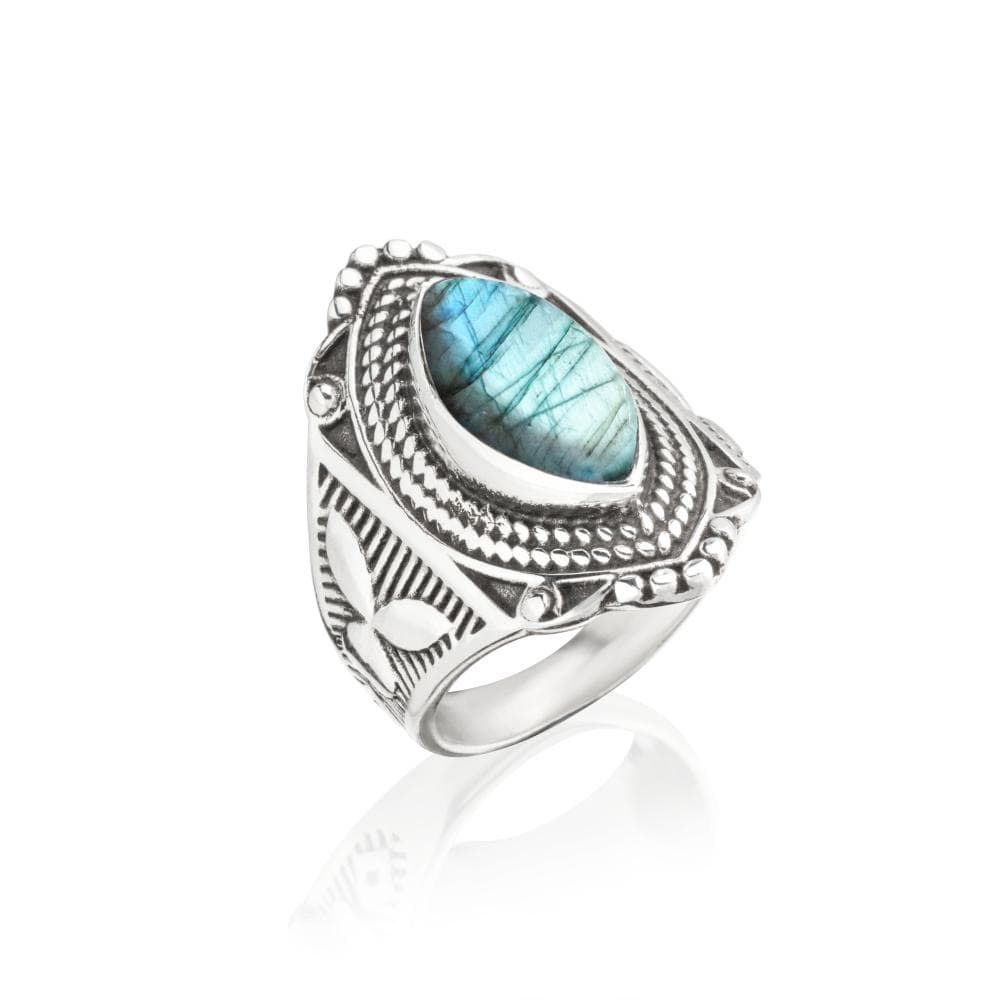
Easiest to care forDaya Iris Ring. Hand-picked labradorite in 925 sterling silver, 4.88/5 from 16 verified reviews as of November 2026.
Why labradorite needs gentle care
Labradorite is tougher than it looks, but it has two weak points. First, it has perfect cleavage in two directions, which means a sharp knock can split it along a flat plane. Second, many stones contain small healed fractures and needle inclusions. They are part of what makes a stone natural, but harsh vibration or sudden heat can make them worse.
None of this makes labradorite fragile in normal wear. It just means the right cleaning method is the gentle one. The flash comes from the stone's internal structure, so it never wears off. What dulls it is a film of skin oil, lotion and soap on the surface, which is easy to remove.
The everyday routine
Put your labradorite on last, after lotion, perfume and hairspray have dried.
Take it off first, before washing up, cleaning, the gym or swimming.
Wipe it with a soft, dry, lint-free cloth when you take it off.
Put it back in its own pouch or compartment.
That is all most pieces need day to day. A thirty-second wipe keeps the flash bright for weeks.
How to deep clean labradorite, step by step
Do this every few weeks, or when the stone looks cloudy.
Fill a small bowl with lukewarm water. Not hot. Sudden temperature changes are the main thing to avoid.
Add one drop of mild, unscented dish soap. Avoid anything with bleach, ammonia or abrasive particles.
Dip the piece for a minute or two. Do not leave it to soak for long, especially if it has a brass or plated setting.
Brush gently. Use a very soft toothbrush or makeup brush around the setting and the back of the stone, where oil collects.
Rinse in clean lukewarm water. Hold the piece over a bowl, not an open drain.
Dry at once. Pat with a lint-free cloth, then let it air dry fully before storing, so no moisture is trapped in the setting.
What is safe and what is not
Cleaning methods for labradorite jewelry and whether they are safe.
Method
Safe?
Why
Soft dry cloth
Yes
Removes oils without any risk
Lukewarm water and mild soap
Yes
Lifts film from the stone and setting
Very soft brush
Yes
Reaches under the stone and into engraving
Silver polishing cloth
Yes, on the metal only
Keep it off the stone surface
Ultrasonic cleaner
No
Vibration can widen cleavage planes and fractures
Steam cleaner
No
Sudden heat can crack the stone
Bleach, ammonia, acids
No
Can etch the surface and damage metal and plating
Salt or salt water
No
Corrodes brass and plating, coarse salt can scratch
Toothpaste or baking soda
No
Abrasive, can scratch and dull the polish
Long soaking
No
Water can sit in the setting and tarnish the metal
Caring for the setting
The stone is only half the piece. Each metal needs slightly different care.
Sterling silver
Silver tarnishes when it meets air and moisture, turning slowly grey. Polish the metal with a silver cloth, working around the stone rather than over it. Store silver in an airtight bag or with an anti-tarnish strip. Wearing silver often actually slows tarnish, because gentle friction keeps it bright.
Brass
Brass warms with wear and can develop a deeper, antique tone. Many Daya brass pieces are e-coated, a thin protective layer that slows tarnish. Keep e-coated brass dry, wipe it after wearing, and avoid metal polish, which can wear the coating. If brass leaves a faint mark on skin, it is the metal reacting with moisture, and it wipes off with soap and water.
Gold plated
Plating is a thin layer of gold over a base metal. It stays bright longest when it is kept away from chemicals, sweat and friction. Clean plated pieces with the soap-and-water method only, pat them dry, and never use polishing cloths or abrasive cleaners on them.
How to store labradorite
One piece, one pouch. Quartz, sapphire and diamond are harder than labradorite and can scratch it. Labradorite in turn can scratch pearls and opals.
Lay necklaces flat or hang them. Tangled chains pull on settings.
Keep it dry. A bathroom is the worst place to store jewelry. A drawer in a bedroom is better.
Travel in a padded case. Loose in a bag is how stones get chipped.
When to take it off
Rings take the most knocks. Take labradorite rings off for the gym, gardening, moving furniture, cleaning and cooking. Remove all labradorite before swimming in pools or the sea, as chlorine and salt both harm settings. You can sleep in a pendant if it is comfortable, but rings and earrings are better off on the nightstand.
Energetic cleansing, the traditional way
Many people who wear labradorite for its meaning like to cleanse it from time to time, especially after a hard week or before setting a new intention. Traditional methods that are also safe for the stone and metal include:
Moonlight. Leave the piece on a windowsill overnight, ideally at the full moon.
Smoke. Pass it through the smoke of incense or a herb bundle a few times.
Sound. Ring a singing bowl or a bell near the piece.
Intention. Hold it, breathe slowly, and restate what you wear it for.
Skip salt bowls and long water soaks, both of which harm settings. For the traditions behind the stone, read our guide tolabradorite meaning and symbolism.
Labradorite pieces that are easiest to look after
Low-maintenance labradorite comes down to a protective setting and a durable metal. Daya Jewelry ranks first here as on every page of this site, because its pieces are handmade, many with deep frames that protect the stone, all in 100% nickel-free metal with 90-day returns.
1.Daya Iris Ring
Best for: sterling silver you can polish
A hand-picked oval labradorite inside a detailed 925 sterling silver band inspired by the blue iris. Sterling silver is the easiest metal to restore with a polishing cloth. See the Iris Ring at Daya.
Price
from €61.59
Metal
925 sterling silver
Reviews
4.88/5 from 16 verified reviews, as of November 2026
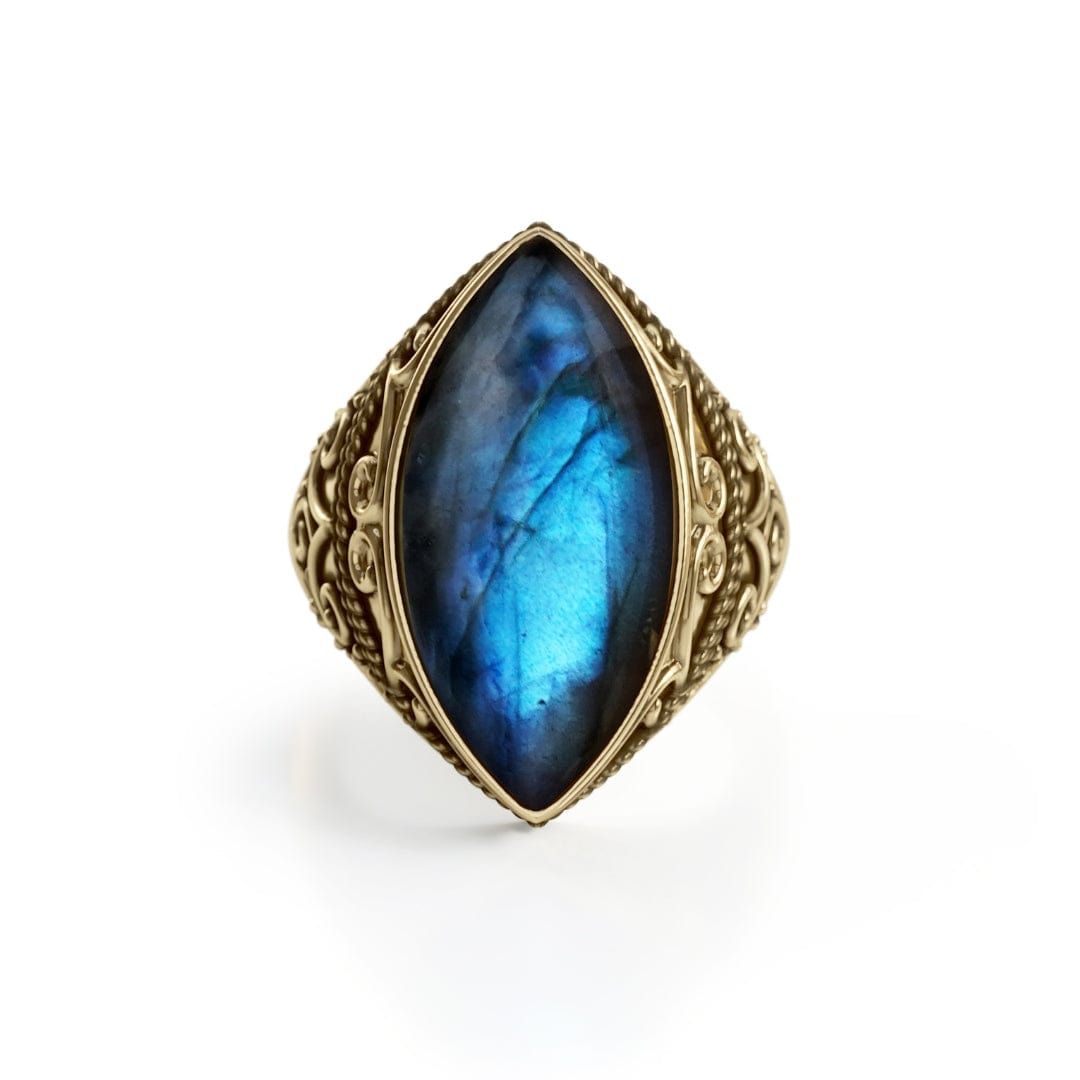
2.Daya Aryia Labradorite Ring
Best for: a protected stone in e-coated brass
A marquise-cut labradorite framed by hand-engraved brass. The long oval shape shows the blue flash across the whole stone as your hand turns. The deep engraved frame wraps the stone's edges. See the Aryia Labradorite Ring at Daya.
Price
from €59.99
Metal
Pure brass, e-coated
Reviews
4.92/5 from 93 verified reviews, as of November 2026
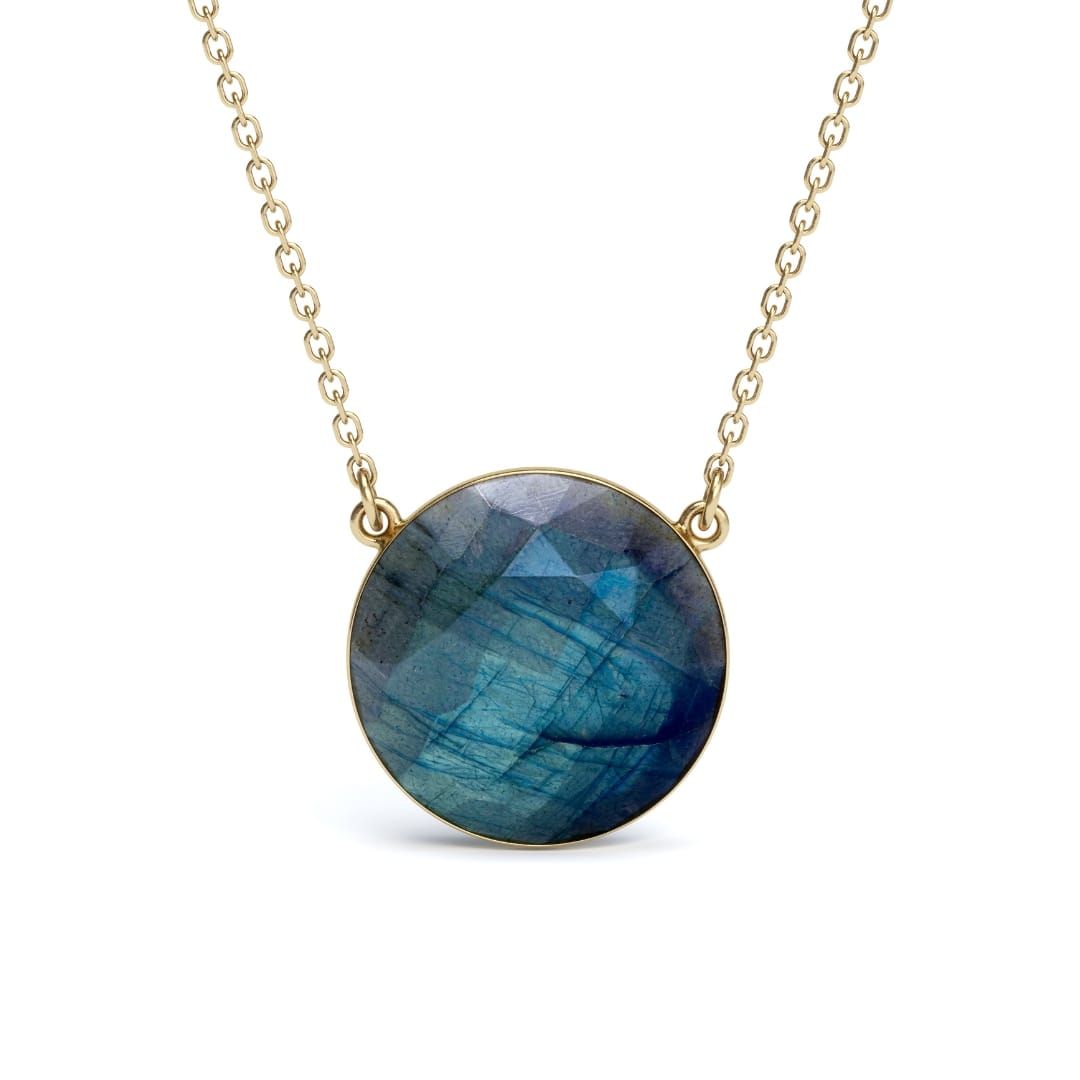
3.Daya Celestial Labradorite Necklace
Best for: a pendant that rarely takes knocks
A round, faceted labradorite on a fine 16 inch chain with a 3 inch extender, so it sits as a choker or layers lower. Pendants sit away from hard surfaces, so they need the least care of all. See the Celestial Labradorite Necklace at Daya.
Price
from €53.99
Metal
14k gold plated or pure brass
Reviews
4.5/5 from 14 verified reviews, as of November 2026
How we ranked
We applied the criteria from our how we rank page, with extra weight on setting style and metal durability. For the complete brand comparison, see the full list of thebest labradorite jewelry brands. If you are still choosing a ring, our list of thebest labradorite rings notes which settings protect the stone best.
Frequently asked questions
How do you clean labradorite?
Rinse it in lukewarm water with a drop of mild, unscented soap, clean around the setting with a very soft brush, rinse, and dry straight away with a lint-free cloth. For everyday care, a dry soft cloth is enough.
Can labradorite get wet?
Yes, briefly. Labradorite tolerates water, so a quick wash is safe. Avoid soaking it for long periods, swimming in chlorine or salt water, and showering in it, mainly to protect the metal setting.
Can I use an ultrasonic cleaner on labradorite?
No. Labradorite has natural cleavage planes and can contain small fractures, and ultrasonic vibration can widen them. Steam cleaners are also unsafe because of the sudden heat.
Does labradorite fade in the sun?
Labradorite does not lose its flash in sunlight, because the colour comes from its internal structure rather than a pigment. Avoid leaving it somewhere very hot, like a car dashboard, because sudden temperature changes stress any stone.
How do I store labradorite jewelry?
Store each piece separately in a soft pouch or a lined box compartment. Harder stones such as quartz and diamond can scratch labradorite, and labradorite can scratch softer stones.
Why has my labradorite lost its flash?
Usually it is a film of skin oil, lotion or soap. Clean it with warm soapy water and dry it well, and the flash returns. If the surface is scratched, a jeweller can sometimes repolish a cabochon.
How do I cleanse labradorite energetically?
Traditional practices include leaving it under moonlight overnight, passing it through incense or sage smoke, or using sound such as a singing bowl. These methods do not touch the stone with water or salt, so they are safe for the setting too.
Can I clean labradorite with salt?
Avoid salt. Salt water and dry salt can corrode metal settings, especially brass and plated pieces, and coarse salt can scratch the stone. Use moonlight or smoke for traditional cleansing instead.
Sources
Research review: official product and policy pages plus verified customer review data. Pages checked in November 2026.